Tag: IT infrastructure

  • Colocation: The Smart Solution for Hosting Your Equipment

    Colocation: The Smart Solution for Hosting Your Equipment

    Discover how colocation allows your company to host its own servers in a secure and reliable data center environment with full hardware control and high connectivity.

    What is Colocation?

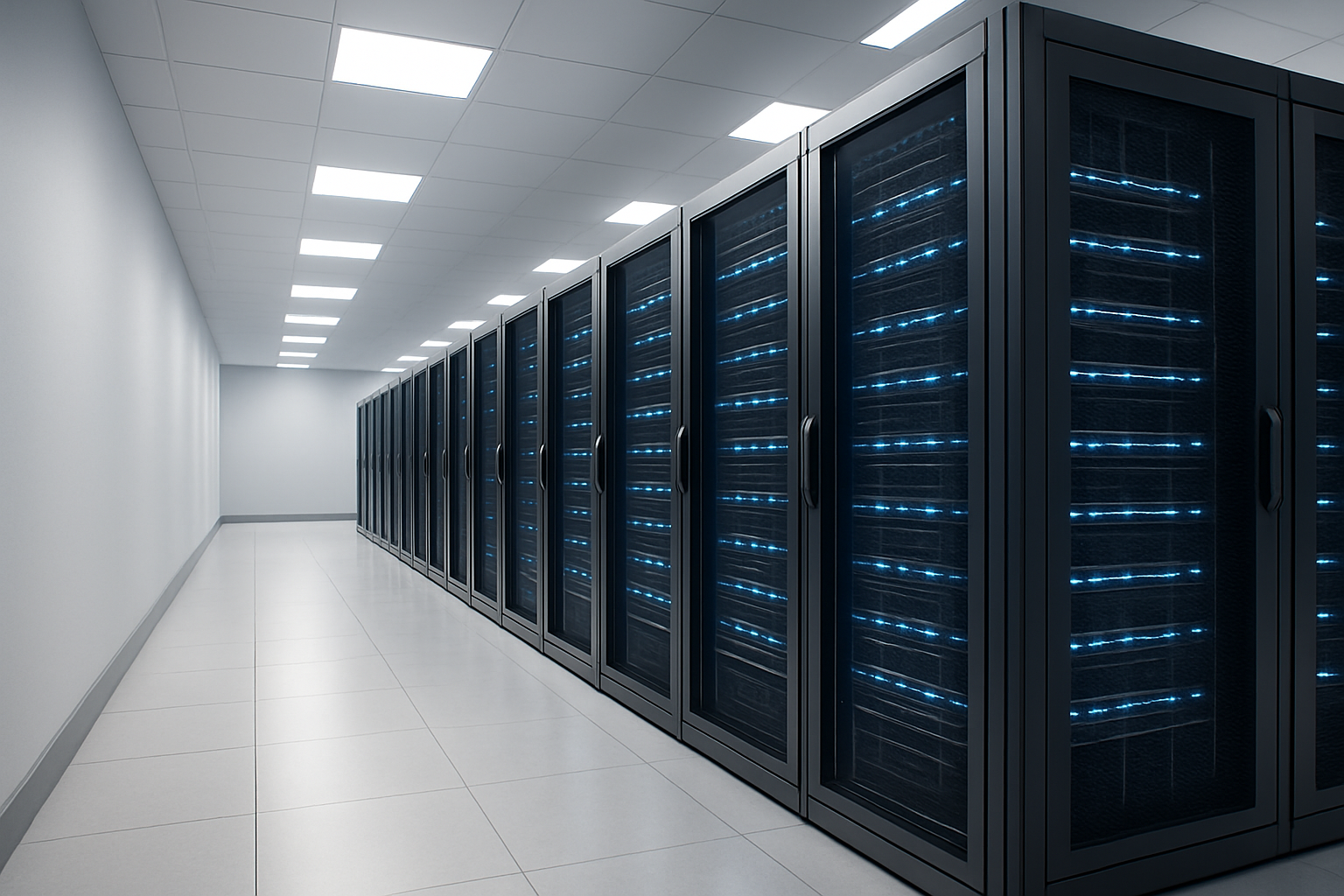
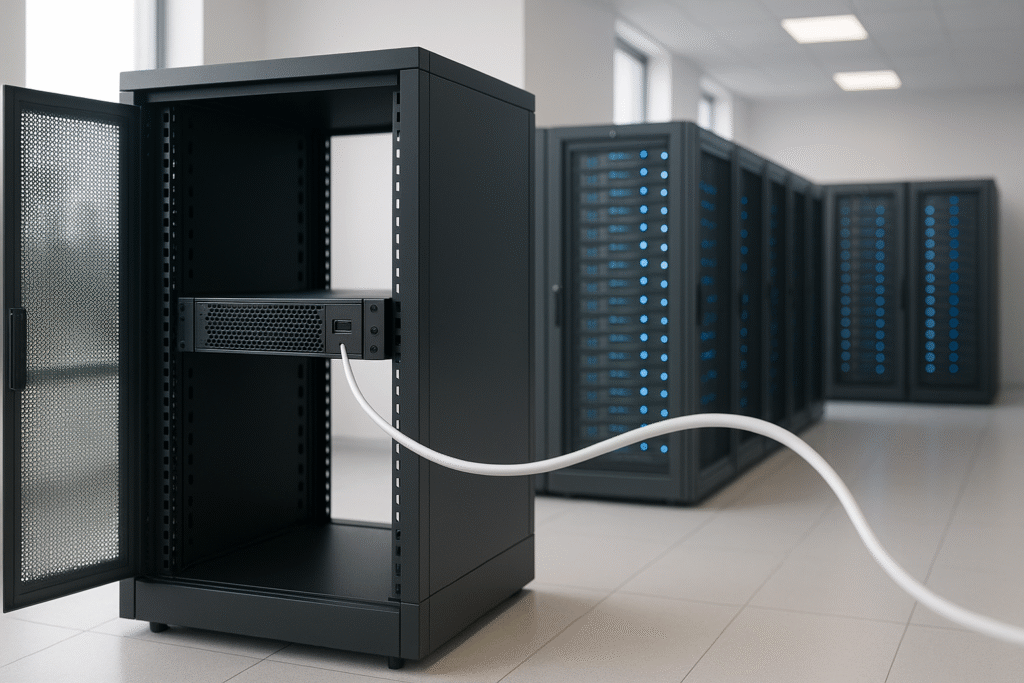
    Colocation is a hosting service that enables your business to place its own servers and hardware in a professional data center, benefiting from redundant power, cooling, physical security, and high-speed connectivity — all while maintaining full control over your equipment.
    Key benefits of Colocation

    Lower operational costs
    No need to build your own infrastructure — save on power, cooling, and security.

    High connectivity and uptime
    Data centers provide multiple ISP links and maximum service availability.

    Secure and monitored environment
    Access control, surveillance, and 24/7 support protect your physical assets.

    Scalability as needed
    Easily expand your resources by adding racks or bandwidth.

    Full control of your hardware
    You manage the servers, systems, and configurations — total freedom.

    When is Colocation the right choice?

    • Companies with existing servers seeking more stable environments
    • Service providers requiring high reliability
    • Projects needing physical control over servers
    • Businesses subject to compliance and audits

    L7CORE: The Right Partner for Colocation

    With Tier III and IV data centers across Brazil and abroad, L7CORE offers:

    • Guaranteed SLA and redundant infrastructure
    • Carrier-neutral connectivity
    • Controlled physical and remote access
    • 24/7 support with expert technicians

    🔵 Ready to host your servers with reliability and control?
    Talk to our team and explore our colocation plans.
  • 3 Common Mistakes When Choosing Hosting — and How to Avoid Them

    3 Common Mistakes When Choosing Hosting — and How to Avoid Them

    Don’t let a bad hosting decision cost you time and money. Learn the 3 most common mistakes companies make — and how to avoid them.

    Choosing a hosting provider may seem straightforward — until something goes wrong. Many businesses choose based solely on price or speed to launch, and later regret it. In this article, we reveal the three most common hosting mistakes and what to look for to ensure stability, performance, and expert support

    1️⃣ Focusing only on price

    The cheapest plan often hides major issues:

    • Frequent downtime during traffic spikes
    • Limited resources (CPU, RAM, bandwidth)
    • Slow or unresponsive support

    💡 Solution: Look for value, not just low cost. Consider SLA, dedicated resources, and the provider’s reputation.

    2️⃣ Overlooking the infrastructure type

    Many users don’t even know whether they’re getting:

    • Shared hosting
    • VPS
    • Cloud
    • Dedicated
    • Bare metal

    Each structure has a direct impact on speed, security, and scalability.

    💡 Solution: Know your application. For demanding systems, cloud, dedicated, or bare metal hosting is often the right call.

    3️⃣ Ignoring technical support

    Support is underestimated — until an outage hits and nobody responds.

    • Limited to business hours
    • Slow ticket resolution
    • Lack of skilled technicians

    💡 Solution: Choose providers with 24/7 expert support, clear SLAs, and fast resolution times. Peace of mind comes from knowing help is always available.

    Hosting is not just about disk space or bandwidth — it’s about ensuring the stability of your digital operation.

    🔵 At L7CORE, we offer more than just servers. We deliver infrastructure built for resilience, with 24/7 expert support and tailored hosting solutions.

    Talk to our team and discover what professional-grade hosting really means.

  • Migrating to a Professional Data Center: The Essential Checklist

    Migrating to a Professional Data Center: The Essential Checklist

    Planning to migrate your infrastructure to a professional data center? Here’s a technical checklist to ensure a secure, efficient and scalable transition.

    Why migrate to a professional data center?

    Growing businesses inevitably hit infrastructure limits. A professional data center offers:

    • High availability (uptime)
    • Physical and cyber risk reduction
    • On-demand scalability
    • Consistent performance with expert support

    But a smooth transition starts with a proper checklist.

    ✅ Essential Checklist for a Safe Migration

    1. 📦 Audit your current inventory

    • What systems and applications will be moved?
    • Are there any interdependencies?
    • Any legacy systems that need adaptation?

    Perform a full technical mapping before moving anything.

    2. 🔐 Define your security requirements

    • Do you need dedicated firewalls?
    • What encryption standards are in place?
    • Are you subject to LGPD, HIPAA, PCI-DSS, etc.?

    The data center must offer compliance, physical isolation, and continuous monitoring.

    3. 🌐 Plan your connectivity

    • Will you need a dedicated link, BGP, or multiple carriers?
    • Is there redundancy?

    Low latency and resilience are non-negotiable for real-time services.

    4. 📈 Forecast growth and scalability

    • How fast is your traffic or resource usage growing?
    • Can the provider scale vertically and horizontally?

    Plan for tomorrow, not just today.

    5. 👨‍💻 Confirm support and SLA

    • Is 24/7 expert human support included?
    • What’s the average incident response time?
    • Can you speak directly with engineers?

    Without real support, even great infrastructure fails.

    6. 🔄 Test before going live

    • Run load tests, failover simulations, and validation
    • Ensure data integrity
    • Plan for rollback in case of failure

    A safe migration includes backup, validation, and rollback.

    Migrating to a professional data center is a strategic leap. Done right, it gives your company stability, growth, and peace of mind.

    🔵 At L7CORE, we help businesses migrate with precision and performance. Our technical team supports every step of the journey.

    Request a free infrastructure review today.

  • Data Centers Tier III vs Tier IV: What Does Your Business Really Need?

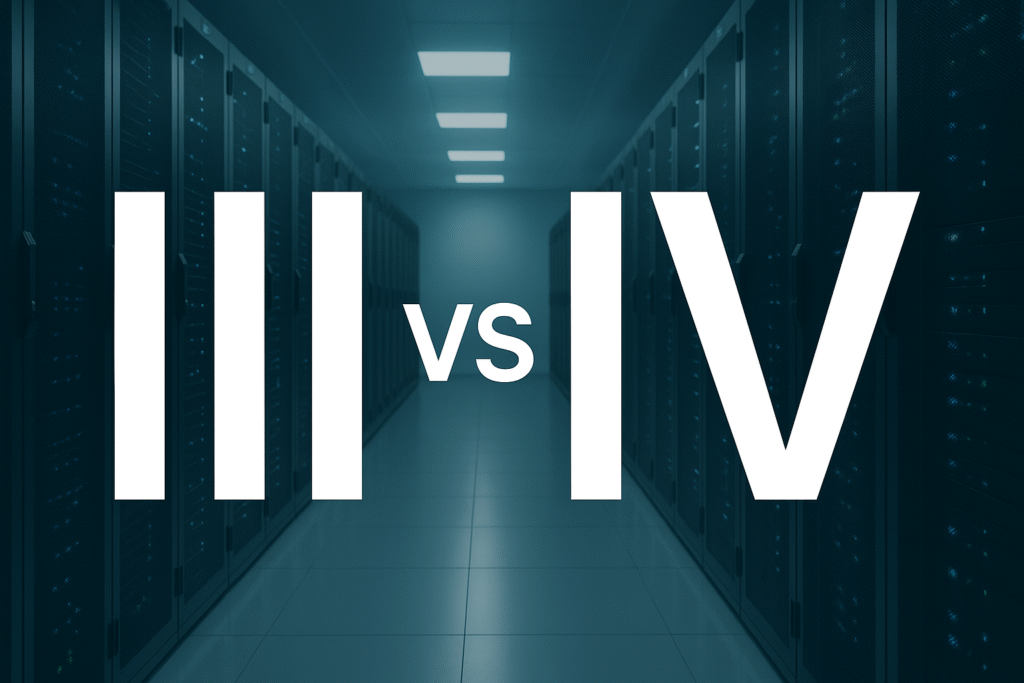
    Data Centers Tier III vs Tier IV: What Does Your Business Really Need?

    Learn the differences between Tier III and Tier IV data centers and discover which infrastructure level best fits your business needs.

    What are Data Center Tiers?

    Tiers are classification levels defined by the Uptime Institute to evaluate the design and reliability of a data center. The most common for enterprise use are Tier III and Tier IV.

    Tier III: High availability with efficient cost

    A Tier III Data Center provides:

    • N+1 redundancy: One backup system for every critical component
    • 99.982% uptime annually (up to 1.6 hours of downtime/year)
    • Maintenance without shutdown
    • Cost-effective for high-demand businesses

    Ideal for companies that need high uptime but want to control infrastructure costs.

    Tier IV: Maximum fault tolerance and reliability

    A Tier IV Data Center includes:

    • 2N + 1 redundancy: Two independent systems plus backup
    • 99.995% uptime annually (up to 26 minutes of downtime/year)
    • Fully fault-tolerant architecture
    • Mission-critical environments (finance, government, health)

    Recommended where any downtime equals major losses.

    Which Tier is right for your business?

    CriteriaTier IIITier IV
    Uptime99.982%99.995%
    RedundancyN+12N + 1
    CostMediumHigh
    Best forSaaS, e-commerce, enterpriseBanks, government, critical ops
    Fault TolerancePartialFull

    What does L7CORE offer?

    L7CORE operates both Tier III and Tier IV certified data centers — tailored to your project’s needs with robust infrastructure, advanced security, and enterprise-grade support.

    🔵 Want to understand which Tier fits your infrastructure strategy?
    Talk to our specialists.

  • Dedicated Hosting Can Reduce Loading Time by Up to 60%

    Dedicated Hosting Can Reduce Loading Time by Up to 60%

    Learn how bare metal dedicated infrastructure can accelerate your website or system by up to 60%. Understand why speed is critical in today’s digital environment.

    Why speed matters

    Loading time isn’t just a technical metric — it’s a business-critical factor. Studies show that even 1 extra second in loading time can decrease conversions by up to 7% and increase bounce rate.

    If performance matters, your infrastructure must deliver.

    The downside of shared hosting

    Most low-cost hosting plans run on shared infrastructure, meaning:

    • Multiple clients on the same server
    • Limited resources (CPU, RAM, disk)
    • Slowdowns caused by other users
    • Unpredictable performance

    Even if your code is optimized, the server itself can be the bottleneck.

    The power of dedicated hosting (bare metal)

    Switching to dedicated or bare metal hosting eliminates shared resource issues.

    Up to 60% faster loading times
    Full access to processing power
    Consistent, stable performance
    Perfect for scaling mission-critical apps

    With zero neighbors, your server performs at full capacity — always.

    When should you switch?

    • Your system slows down during peak hours;
    • You run heavy workloads or large traffic;
    • Your business relies on uptime;
    • You want to scale with confidence

    Infrastructure is a competitive edge

    In the digital age, the right infrastructure isn’t optional — it’s strategic.

    🔵 L7CORE delivers bare metal servers with full power, optimized connectivity, and human technical support.

    Talk to a specialist and unlock your system’s full potential.

  • L7CORE Announces $3 Million Investment in Latin America with Strong Growth Expected Over 12 Months

    L7CORE Announces $3 Million Investment in Latin America with Strong Growth Expected Over 12 Months

    L7CORE, a leading provider of Data Center and technology solutions, has confirmed a strategic investment of $3 million to expand its operations across Latin America over the next 12 months.

    With this substantial capital injection, the company aims to accelerate its regional presence, strengthen local partnerships, and drive the development of innovative technologies to meet the growing market demand.

    “We believe in the potential of Latin America and are committed to making significant investments to solidify our position and deliver solutions that truly add value to our clients and partners,” said Renato Eurípides, CEO of L7CORE.

    The company projects steady revenue growth aligned with the investment made, focusing on financial sustainability and balanced expansion.

    This move reinforces L7CORE’s confidence in the Latin American market and its strategy to position itself as one of the top global players in Data Centers and technology.

    We than Renato Eurípides for his trust and inspiring leadership, which make this journey of growth and innovation at L7CORE possible.